


Engineering
Civil
RVOE 20220725
Design the works. Build the region.
ICES Civil Engineering trains you to design, build and supervise construction work — structures, hydraulics, roads and foundations — with sound technical judgement and full compliance with municipal, state and national regulations.
Talk to an advisor
Datos generales del programa
9 four-month terms
Three years of coursework, plus the social service placement.
Blended format
Online coursework during the week and on-campus classes on Saturday or Sunday.
Virtual campus
Learning platform with a virtual library and activities guided by your lecturer.
Placement agreements
Agreements with SEFIPLAN, Liceo de Artes y Oficios and ARSPS for practice and social service.
About the program
Structures, hydraulicsand construction
Across nine four-month terms you move from the basic sciences — algebra, physics, chemistry, geology — to the design of the works themselves: structural analysis, strength of materials, soil behaviour, reinforced concrete, steel, masonry, foundations and building services.
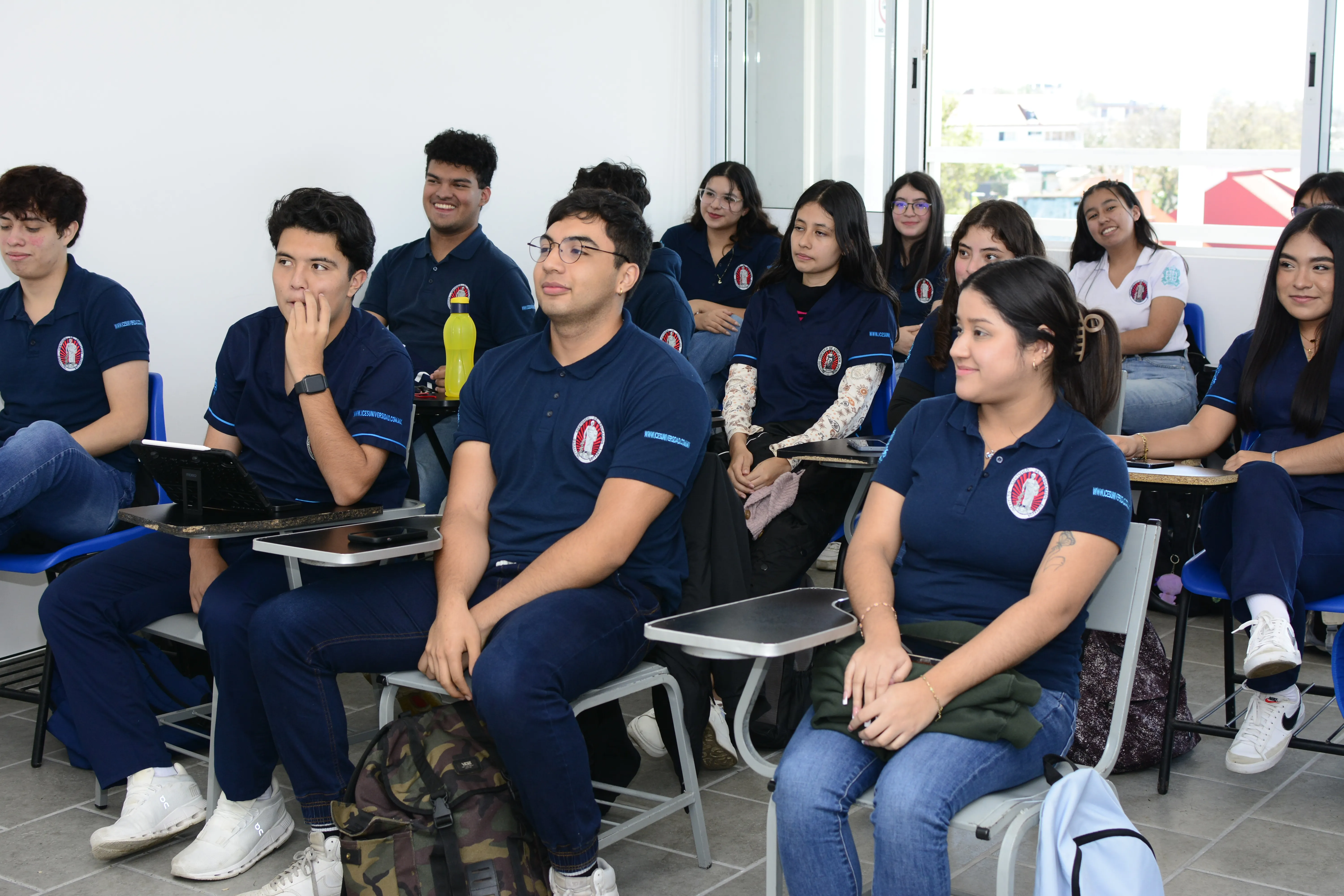
The blended format is built so you don't have to stop working: the theory advances on the virtual campus at your own pace, and on Saturday or Sunday you come to campus to put it into practice.
Graduate profile
The engineeryou will become
By the end of nine terms you won't just know how to calculate a structure — you'll know how it gets built, with what and at what cost. These are the four capabilities you leave ICES with.
Structural design and analysis
You analyse and size structures in reinforced concrete, steel and masonry, drawing on strength of materials, statics and the behaviour of the soil they will rest on.
Construction and site supervision
You master materials, machinery and hydraulic, sanitary and electrical services, and supervise work on site against safety and quality criteria.
Planning, costing and management
You plan and control the works, build the cost analysis, formulate and appraise projects, and manage the resources of a construction firm.
Regulation and sustainable development
You choose construction alternatives consistent with municipal, state and national policy, with professional ethics and care for the environment.
Curriculum
Course map
Nine four-month terms that move from the basic sciences to project design and site supervision. Pick a term to see the courses you will take.
First term
- 01Introduction to Civil Engineering
- 02Algebra I
- 03General Chemistry
- 04General Physics
- 05Technical Drawing and Graphic Representation
- 06Learning Strategies
Second term
- 01Statics and Dynamics
- 02Algebra II
- 03Digital Design
- 04Engineering Law
- 05Surveying
- 06Oral and Written Communication
Third term
- 01Introduction to Hydraulics
- 02Algebra III
- 03Strength of Materials
- 04Cost Analysis
- 05Soil Behaviour
- 06Critical Thinking
Fourth term
- 01Construction Planning and Control
- 02Differential and Integral Calculus
- 03Professional Ethics
- 04Structural Analysis
- 05Geology
- 06Sustainable Development
Fifth term
- 01Business Management
- 02Roads and Highways
- 03Construction Machinery and Equipment
- 04Hydrology and Hydrometry
- 05Electrical and Telephone Installations
- 06Reinforced Concrete Design
Sixth term
- 01Statistics
- 02Statically Determinate Structures
- 03Stability
- 04Hydraulic Concrete
- 05Port Engineering
- 06Foundations
Seventh term
- 01Research Methodology
- 02Environmental Care
- 03Masonry Structures
- 04Civil Engineering Studies and Projects
- 05Auditing of Works and Services
- 06Sustainable Housing Design
Eighth term
- 01Graduation Seminar I
- 02Hydraulic and Sanitary Installations
- 03Steel Structures
- 04Site Supervision and Safety
- 05Human Talent Management
Ninth term
- 01Graduation Seminar II
- 02Project Formulation and Appraisal
- 03Water Treatment
- 04Management and Organisation of Construction Firms
- 05Real Estate Valuation
Admission requirements
Put your file together
Gather your paperwork before starting the process and hand it in along with the corresponding payments.
Documents
- Birth certificate
- Middle school certificate
- High school certificate
- CURP (Mexican population registry code)
- INE (Mexican voter ID)
- Proof of address
- Letter of good conduct
- 6 passport-size black and white photographs
- Medical certificate issued by SESVER or the Red Cross
Payments
- Academic package fee
- Enrolment fee
- First monthly tuition payment
Frequently asked questions
We answer your questionsbefore you enrol
We have gathered what people ask us most when they are about to take the step: admissions, costs, study formats and campus life. If your question is not here, write to us and we will reply the same day.

We are open Monday through Friday from 9:00 a.m. to 8:00 p.m., and Saturdays from 8:00 a.m. to 6:00 p.m.
Yes. All our bachelor's, master's and doctoral programs are accredited by Mexico's Ministry of Public Education (SEP) under a current federal RVOE.
No. Our only campus is in the city of Xalapa, at Paseo de las Palmas No. 17 y 19, Fraccionamiento Veracruz.
Two: the on-campus format, with in-person classes Monday through Friday, and the blended format, which combines in-person sessions on Saturdays with online study from Monday to Friday.
As a matter of institutional policy, we share tuition costs in person at our campus.
We recommend booking a visit so we can review your situation: that way we can give you accurate information for your particular case.
There is no age limit. As long as you hold a high school certificate, you can begin your professional studies.
Interested?
Let's talk aboutyour future
An advisor answers you on WhatsApp: enrolment dates, tuition, schedules and anything else you need to know before deciding.
Message us on WhatsAppAvailable Monday through Friday.